BACHELOR TOPIC
Development of Metamaterial Absorber
TUNABLE MULTI-FREQUENCY
OPTICAL METAMATERIAL
ABSORBER.
A geometrically scalable double split ring resonator absorber engineered for predictable multi-frequency optical absorption through controlled resonator scaling.
Geometry becomes
light control.
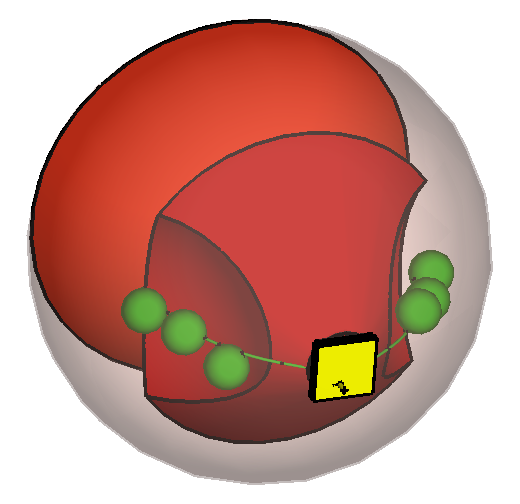
Four scaled resonators. Four designed optical bands. Watch the unit cell respond as the selected resonance moves from 423 to 831 THz.
Control the optical response through geometry.
The proposed absorber uses a DSRR printed above a dielectric spacer and continuous silver ground plane. The ground suppresses transmission, while the split-ring geometry produces LC resonances and confines electromagnetic energy. Instead of rebuilding the topology for every operating point, the resonator dimensions are systematically scaled to tune the response.
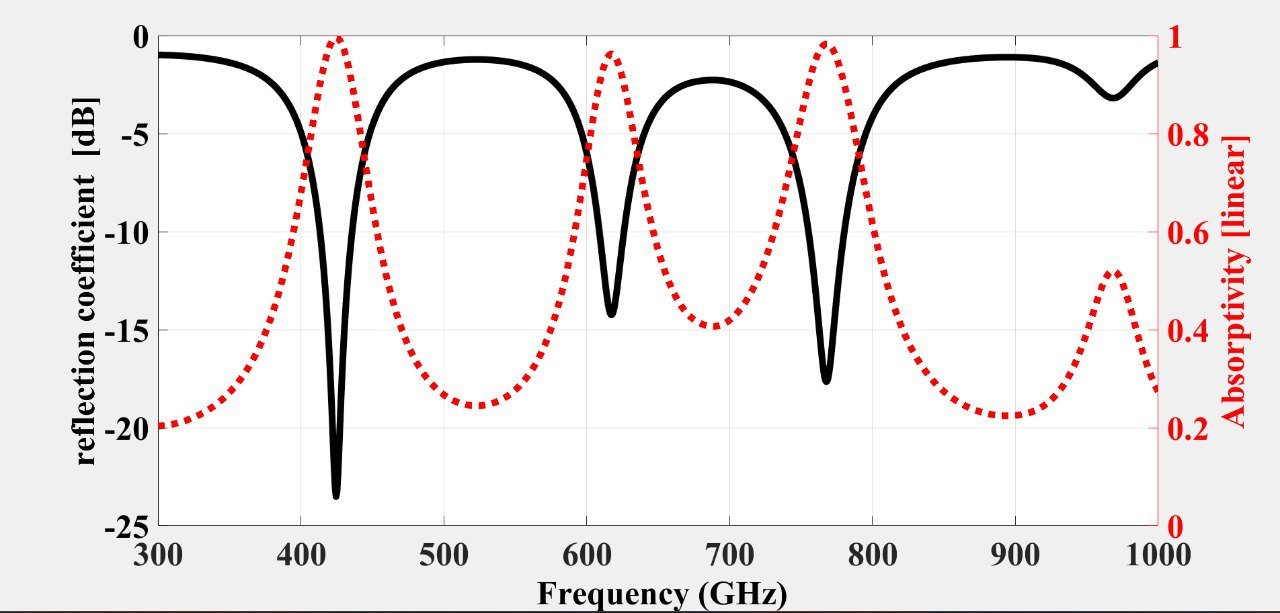
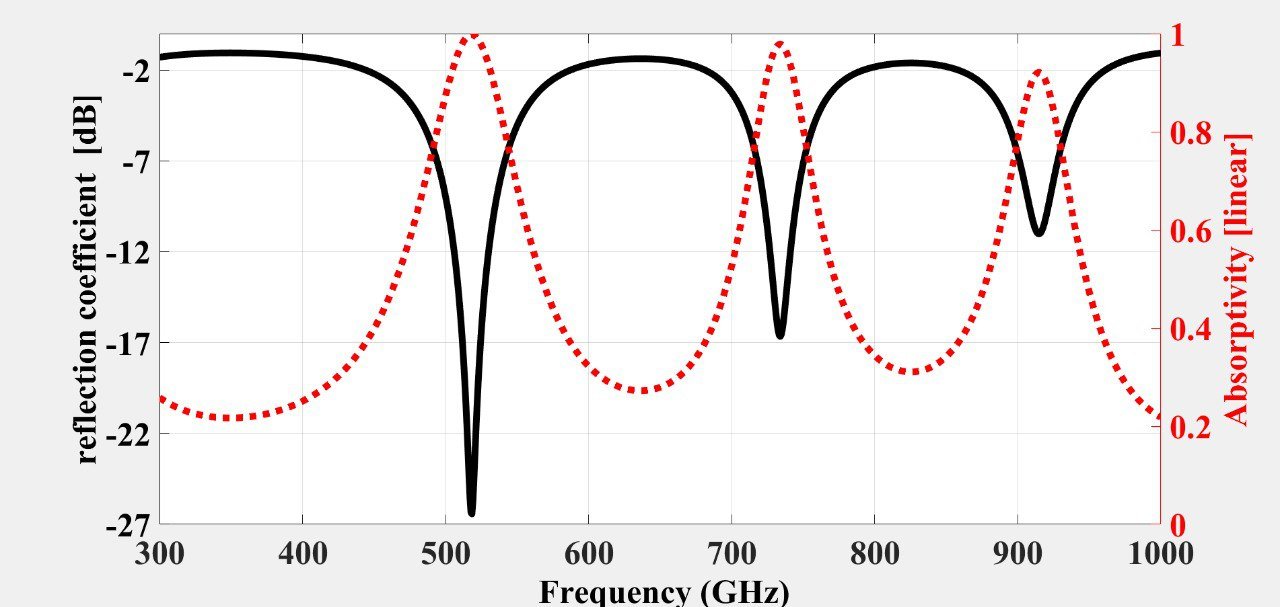
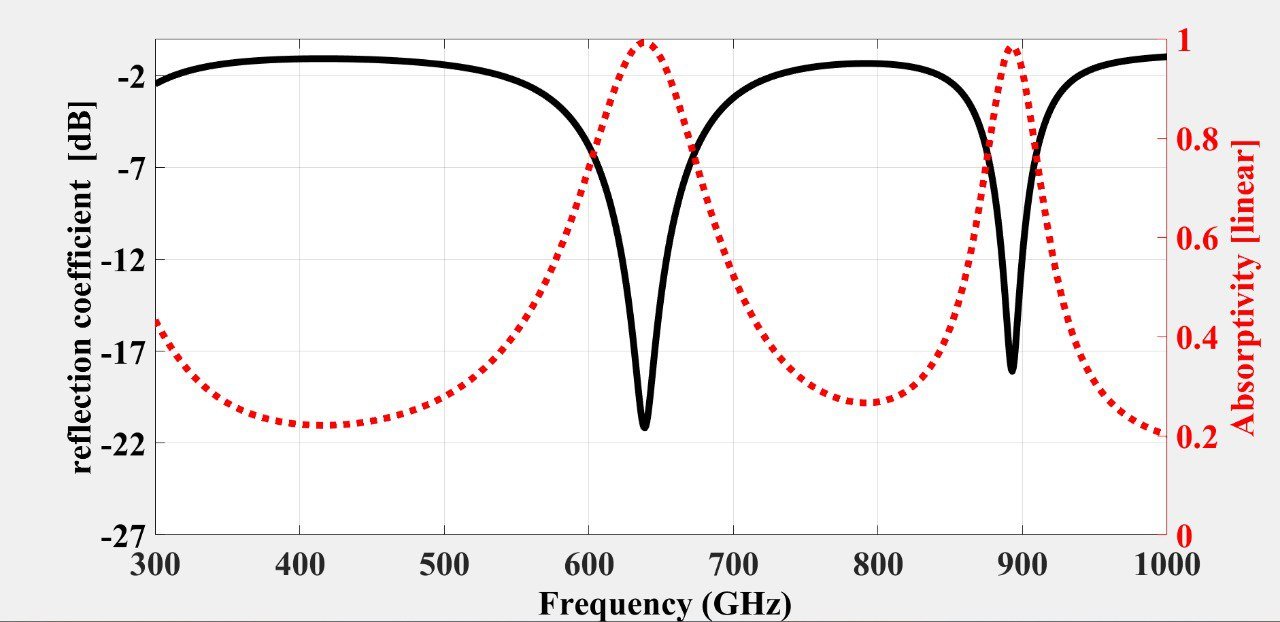
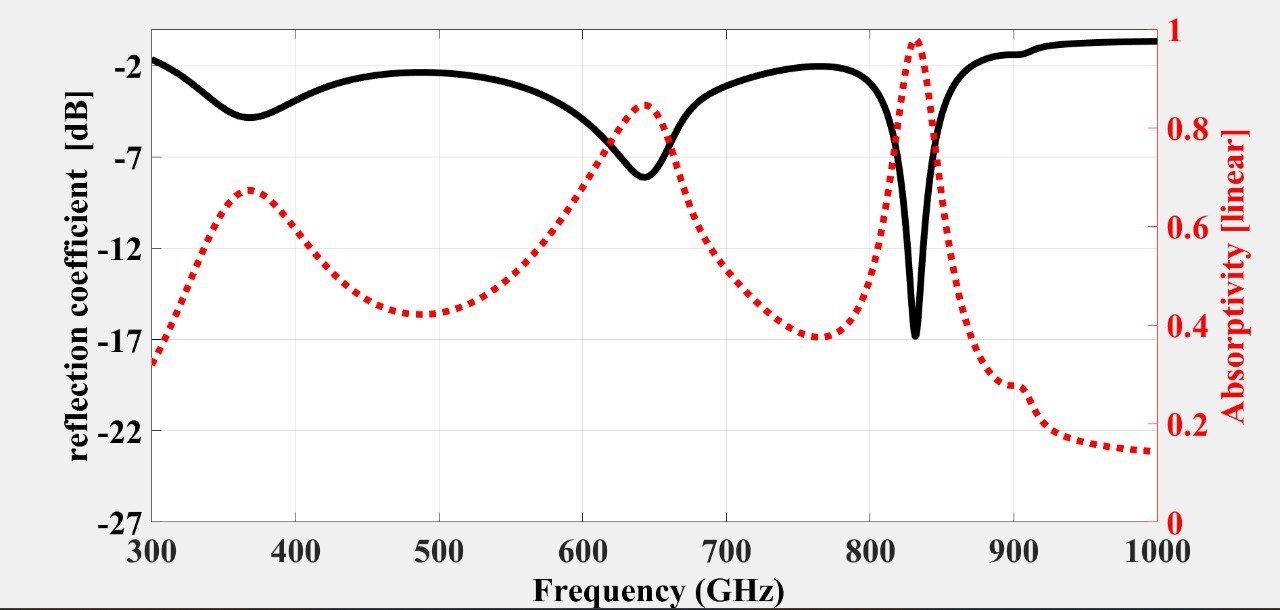
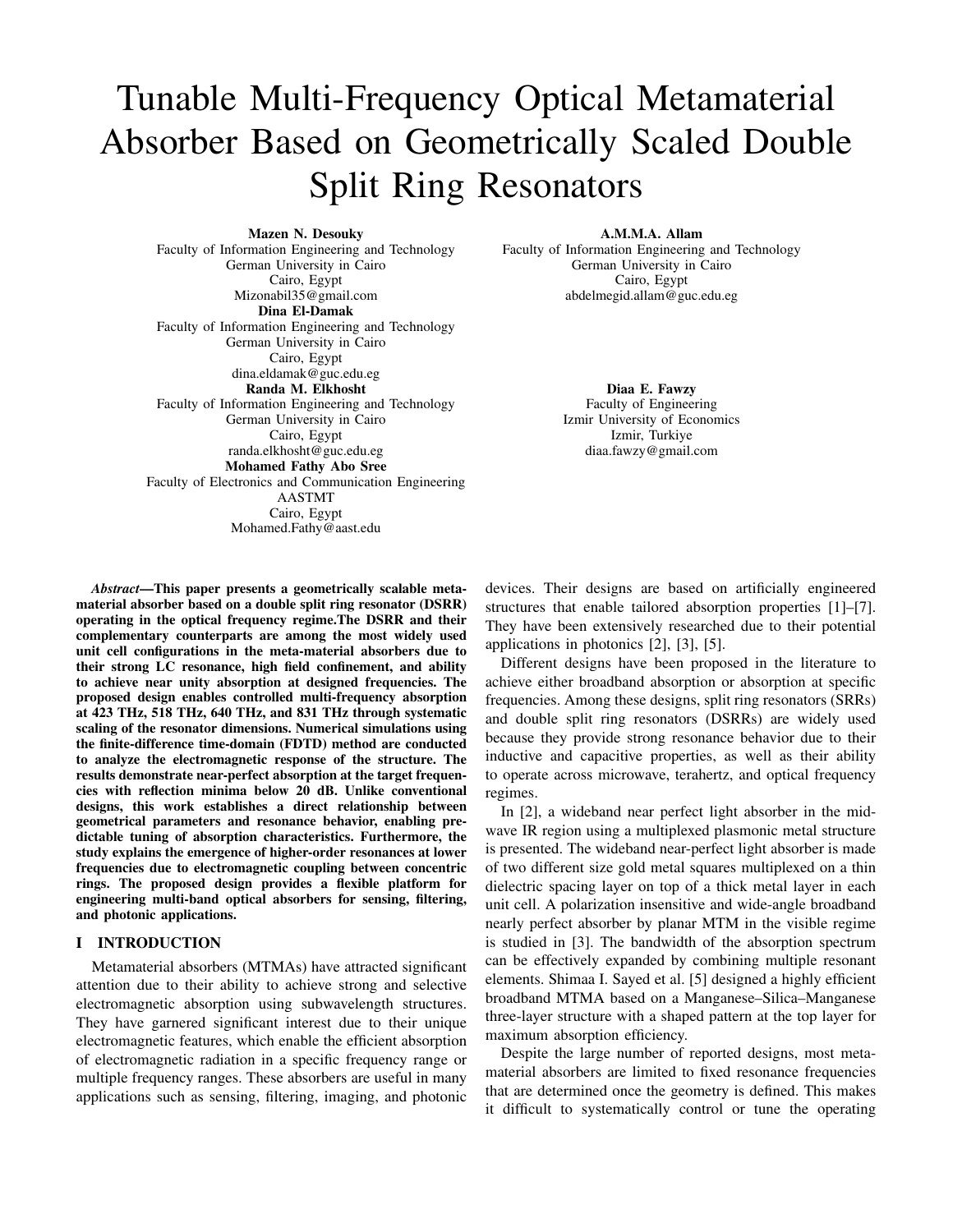
The study reports designed resonances at 423, 518, 640 and 831 THz, with absorption approaching unity at the target resonances.
Scale the resonator. Move the resonance.
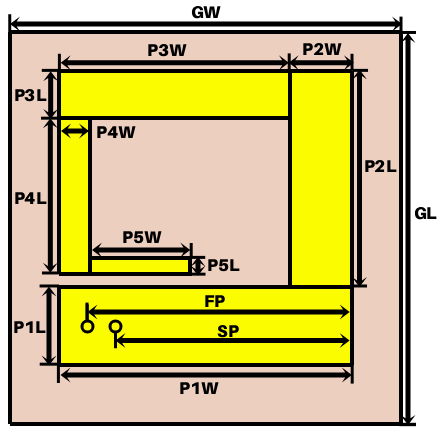
Select one of the four designs to see the actual dimensions reported in the thesis. The live model rescales the concentric DSRR geometry and animates incident optical energy toward the absorber.
The dimensions behind four optical bands.
The spacer and ground thicknesses remain fixed while the lateral DSRR geometry is scaled. The 831 THz case keeps W at 288 nm while using the smaller ring dimensions reported for the high-frequency design.
| Parameter | 423 THz | 518 THz | 640 THz | 831 THz |
|---|---|---|---|---|
| W (nm) | 288 | 230.4 | 180 | 288 |
| r₁ (nm) | 128 | 102.4 | 80 | 80 |
| r₂ (nm) | 80 | 64 | 50 | 50 |
| w₁ (nm) | 16 | 12.8 | 10 | 10 |
| g₁ (nm) | 32 | 25.6 | 20 | 20 |
| s (nm) | 32 | 25.6 | 20 | 20 |
| t (nm) | 32 | 25.6 | 20 | 20 |
| tₛ (nm) | 60 | 60 | 60 | 60 |
| tᵍ (nm) | 40 | 40 | 40 | 40 |
Four resonances. Near-unity absorption.
The simulated S-parameters verify the four designed optical operating points. With the continuous silver ground suppressing transmission, the absorber response is governed primarily by reflection: A = 1 − |S₁₁|² − |S₂₁|².
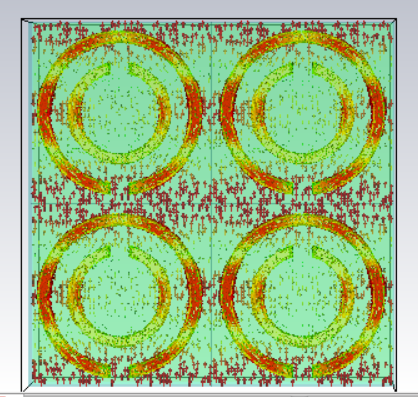
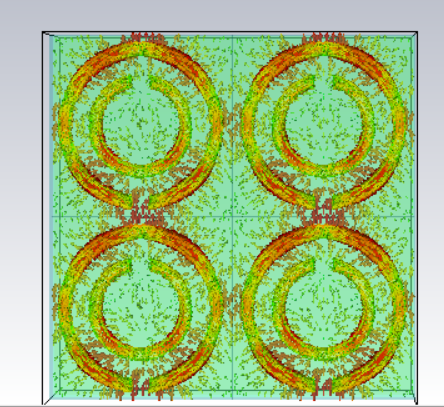
Seeing the resonance mechanism.
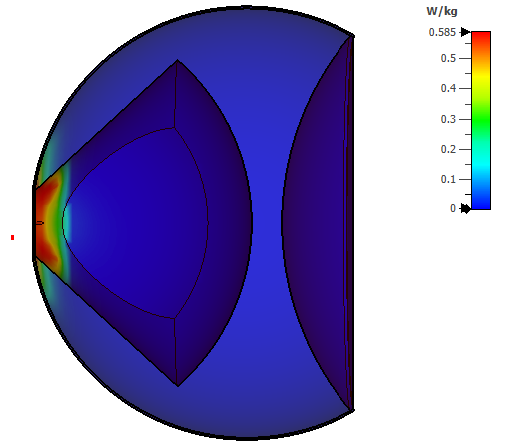
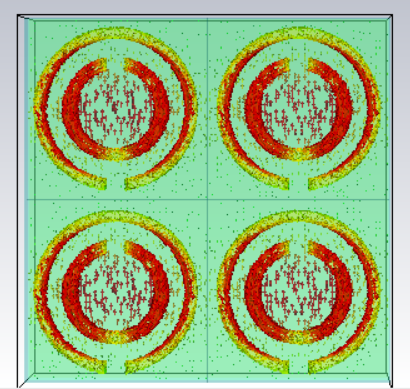
Surface-current concentration around the split rings reveals the resonant behavior and higher-order modes produced by coupling between the inner and outer resonators.
Why the DSRR absorbs optical energy.
The response is produced by the interaction of the patterned silver resonator, dielectric spacer and metallic ground. At resonance, the split rings concentrate electric fields and drive strong surface currents, while the grounded stack suppresses transmission and enables impedance matching to free space.
Field localization
The ring gaps behave as strongly capacitive regions, concentrating the incident electric field around the discontinuities.
Resonant currents
Coupled currents circulate around the inner and outer silver rings, creating the resonant electromagnetic response seen in the surface-current maps.
Impedance matching
At the designed resonance, the effective absorber impedance approaches free-space impedance, minimizing reflected optical power.
Energy absorption
The continuous Ag ground makes transmission negligible; when reflection is simultaneously minimized, incident energy is trapped and dissipated in the structure.
Absorb. Control. Harvest. Power the flight.
The broader research direction is to use engineered optical absorption as the front end of an energy-harvesting architecture. Tunable metamaterial resonances can target selected portions of thermal radiation, providing a path toward concentrating useful absorbed energy and delivering it to a conversion stage for wireless UAV charging concepts.
Multi-band optical receiver
The four designed resonances demonstrate how a common DSRR topology can be geometrically tuned across a wide optical range.
In-flight charging concept
The absorber is the electromagnetic front end; practical charging additionally requires energy conversion, power conditioning, beam/routing architecture and system-level efficiency engineering.
From optical resonance to an energy-delivery architecture.
The absorber is the electromagnetic front end of a larger system. The research path begins with spectral capture, then moves through conversion and power conditioning before energy can be delivered to an airborne platform.
Broadband optical energy reaches the engineered receiving surface.
Scaled split-ring geometry selects designed bands from 423 to 831 THz.
Ground-backed resonance suppresses transmission and minimizes reflection.
Captured electromagnetic energy must be converted and conditioned for useful delivery.
The system-level vision is energy delivery to an airborne platform without landing.
 IEEE CO-SPONSORED RESEARCH MILESTONE
The thesis moved from simulation to the international research stage.
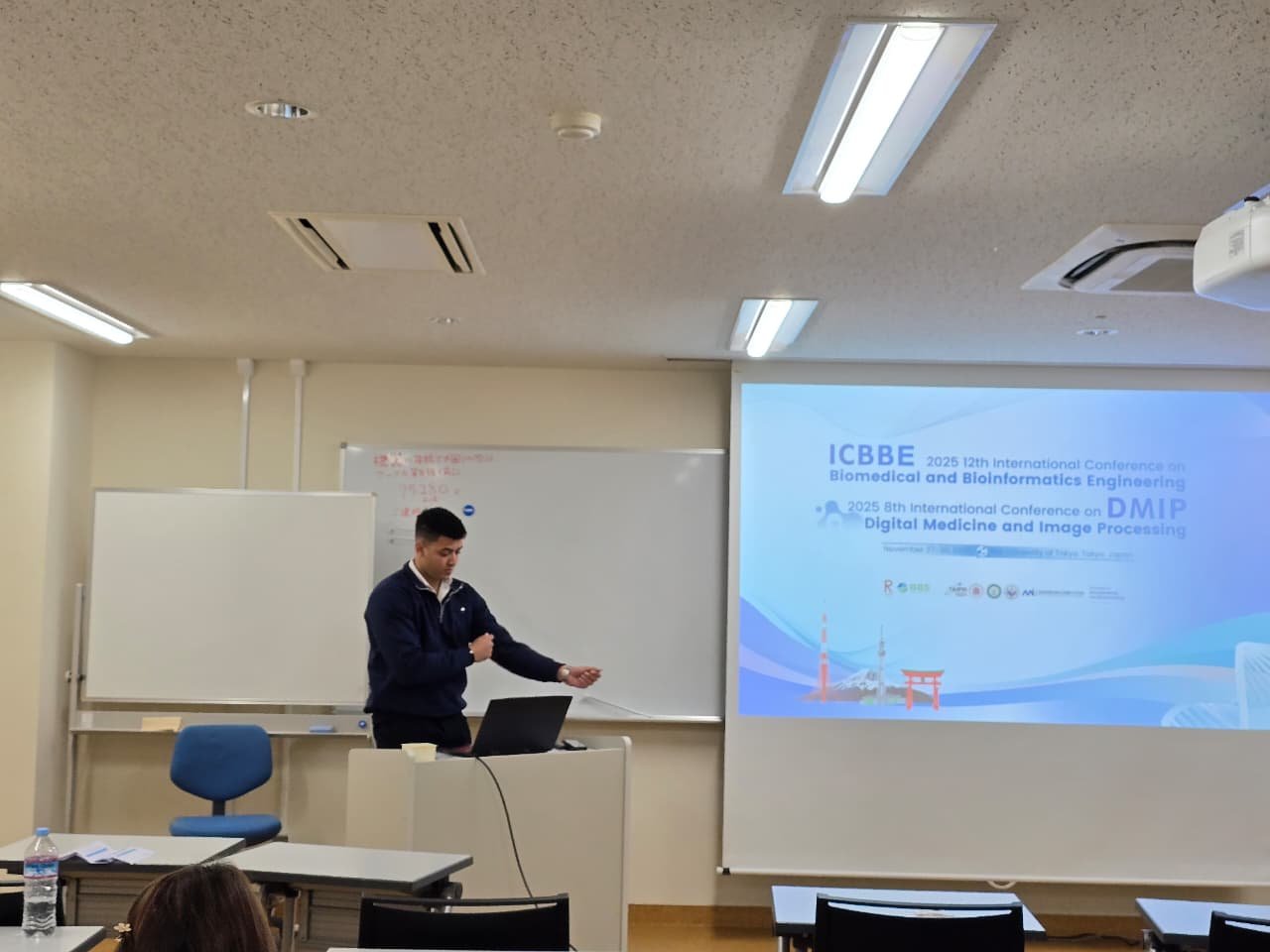
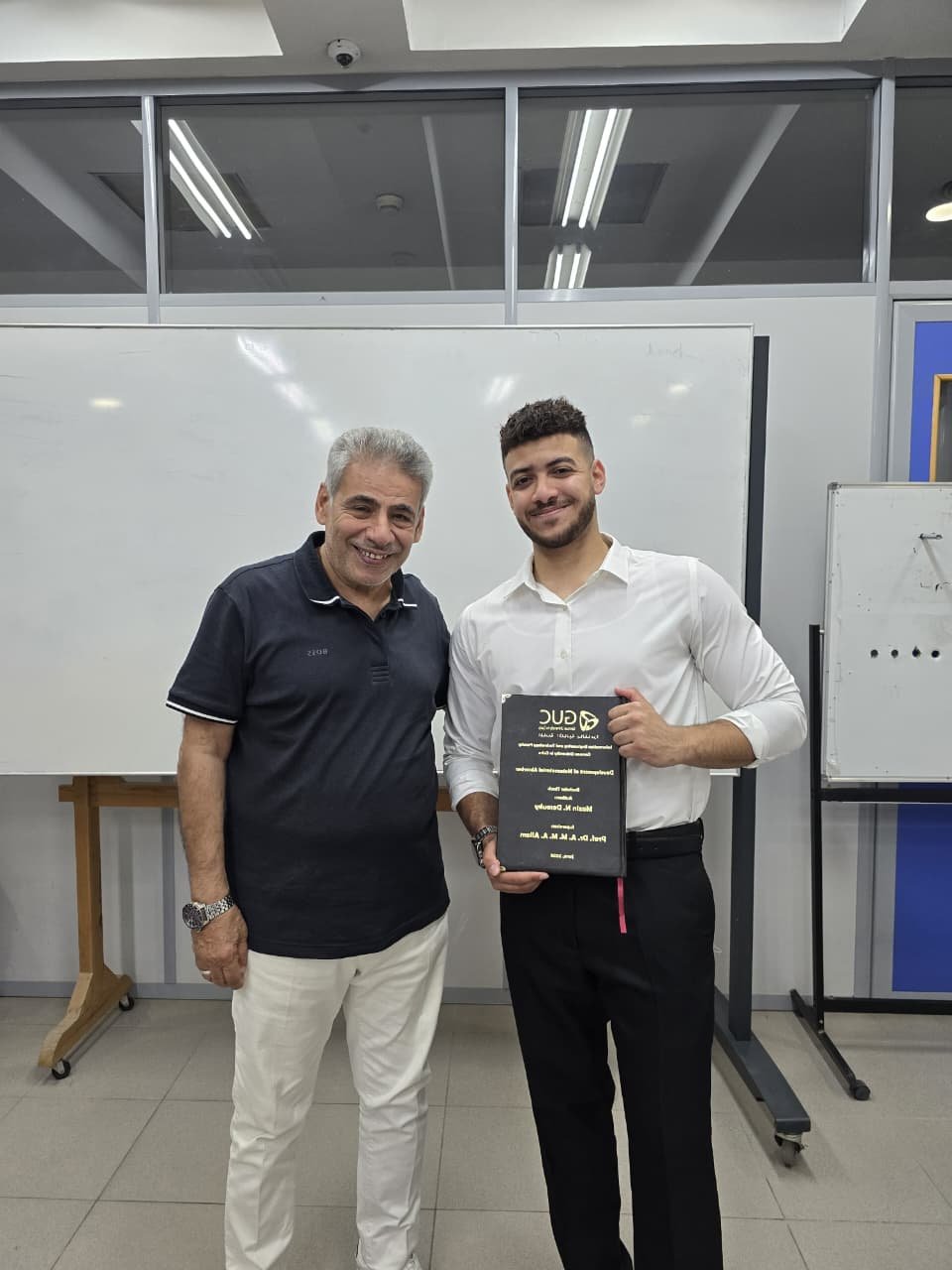
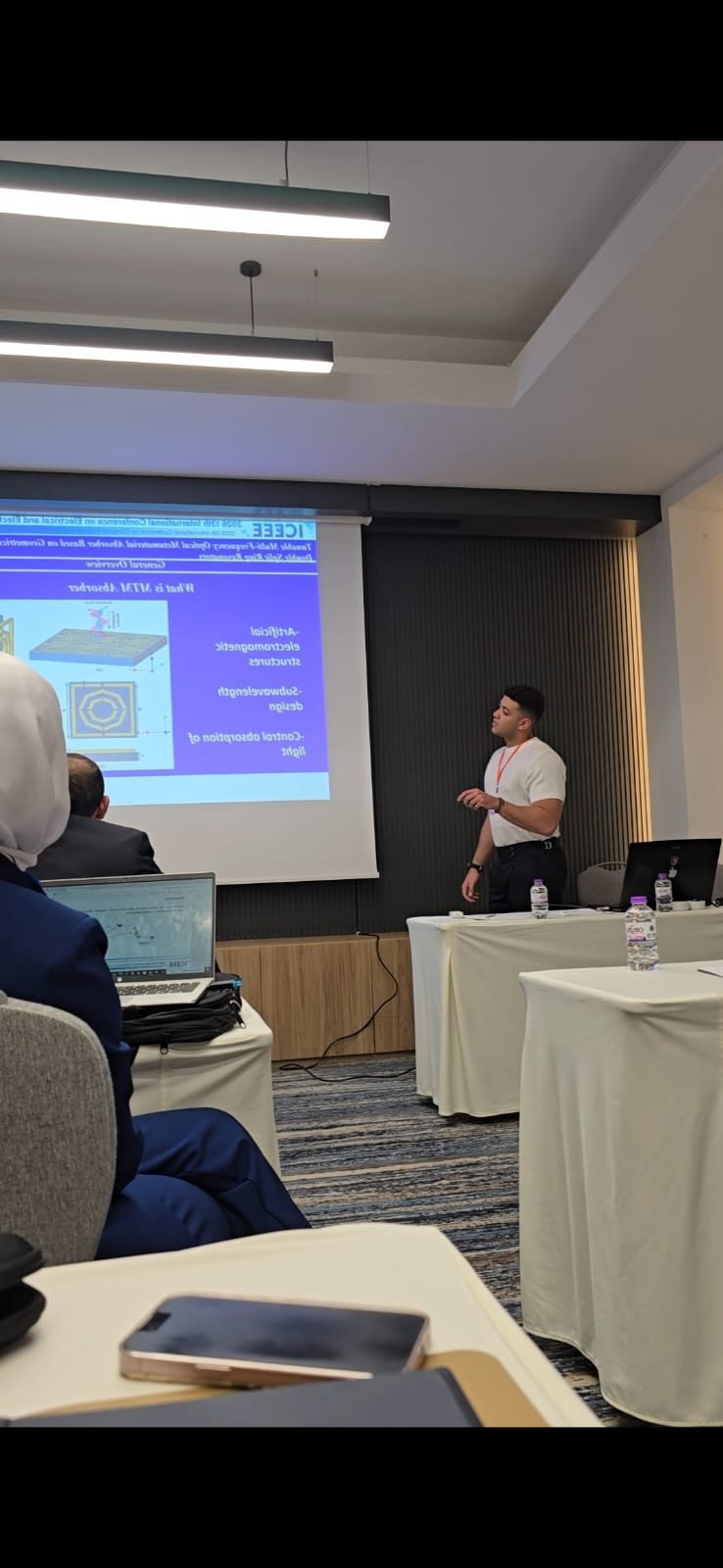
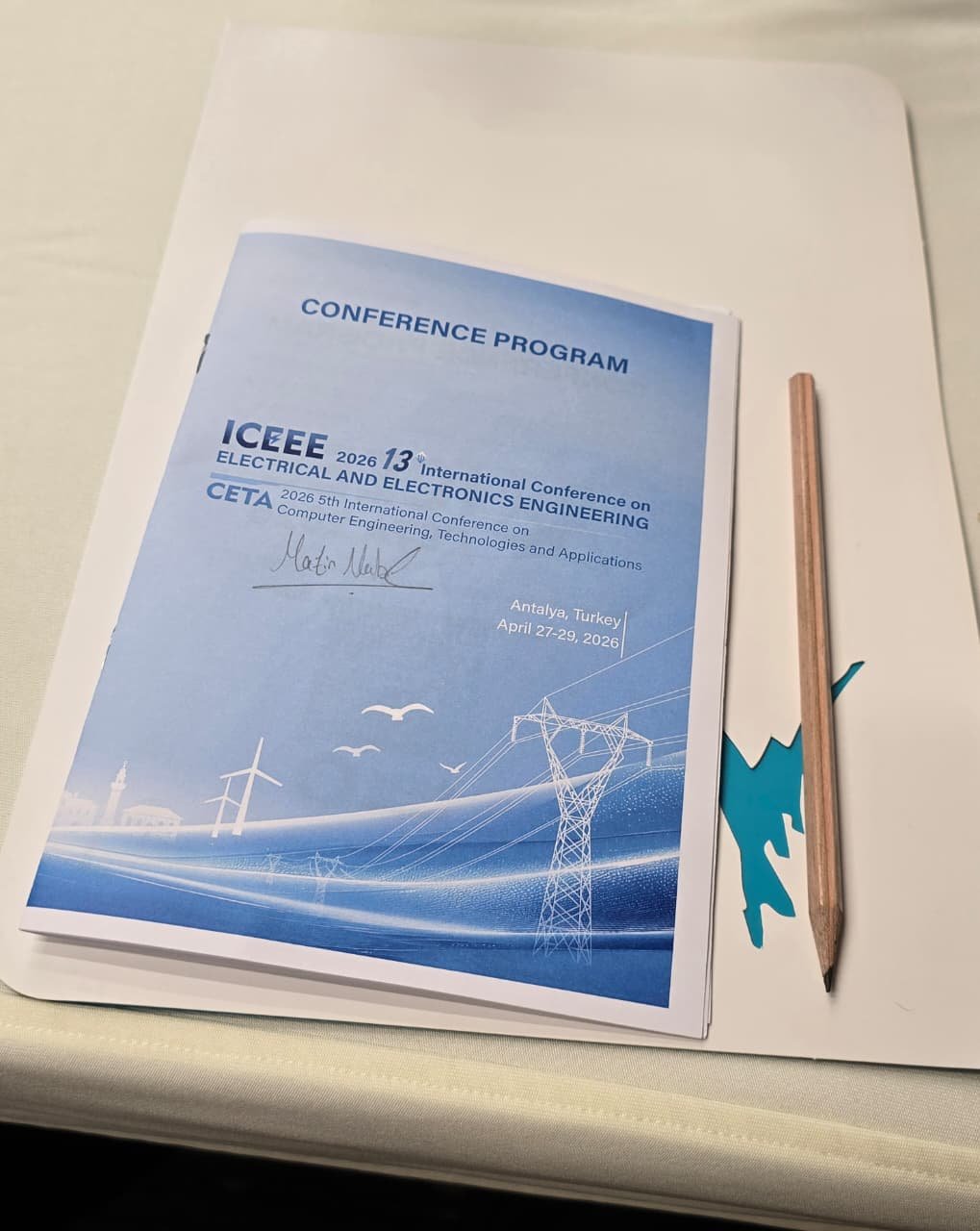
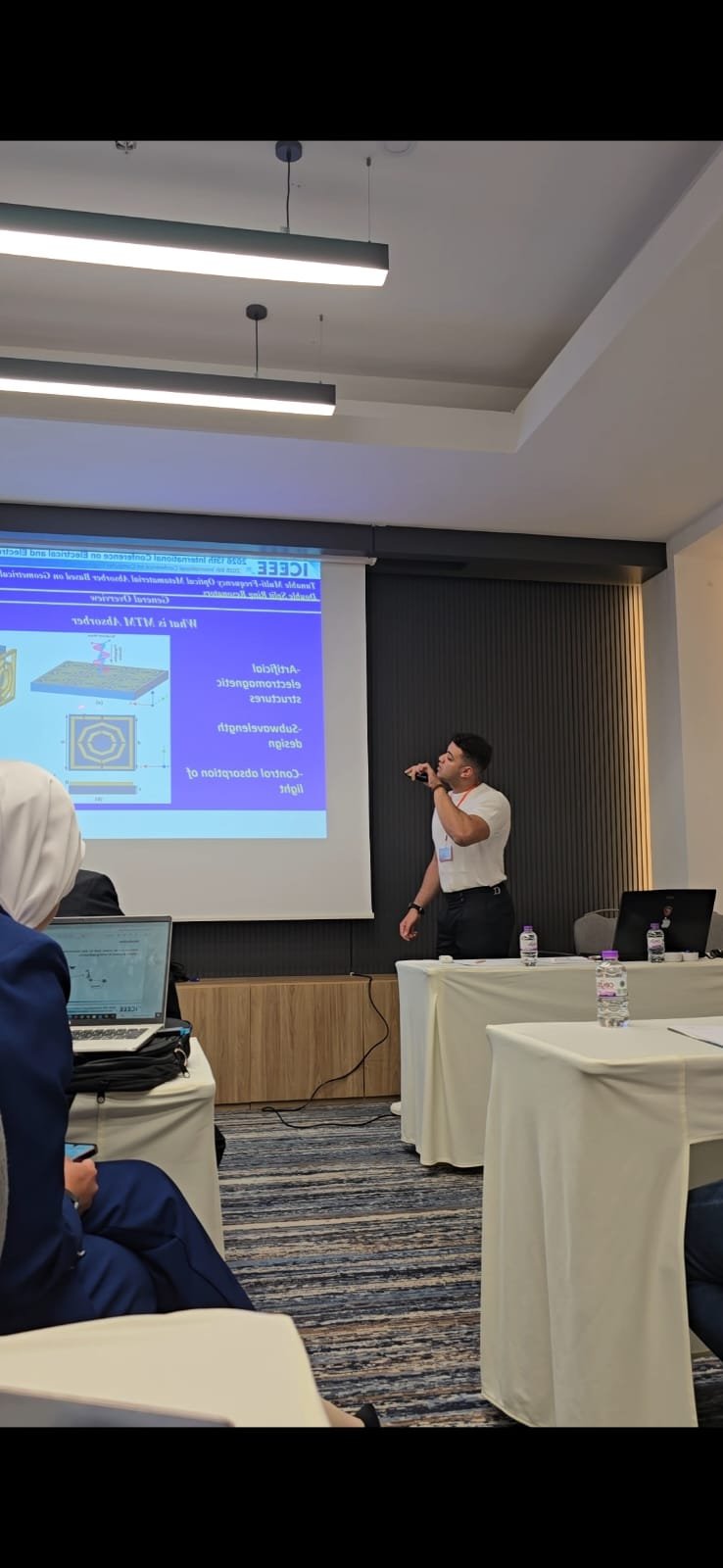
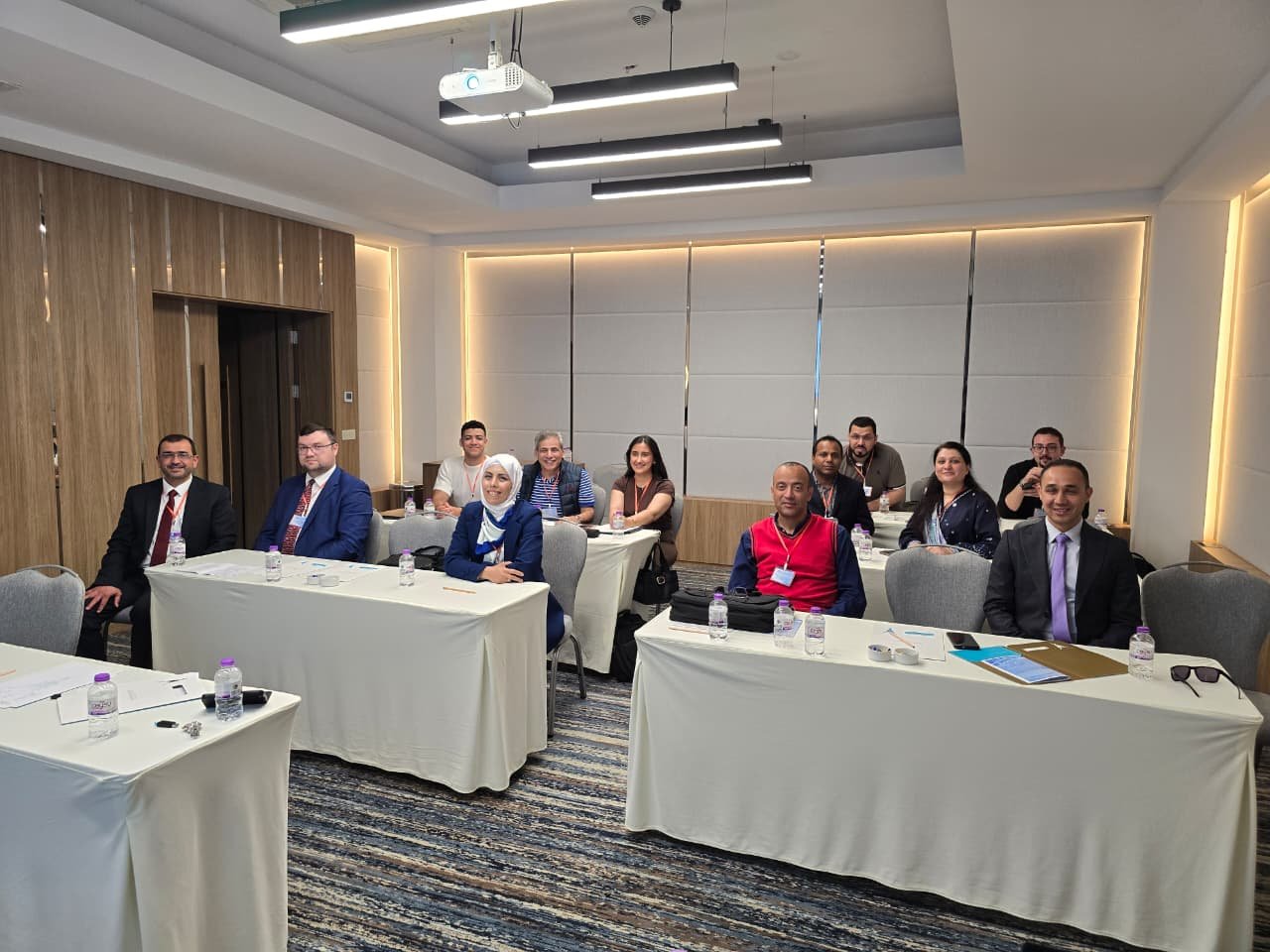
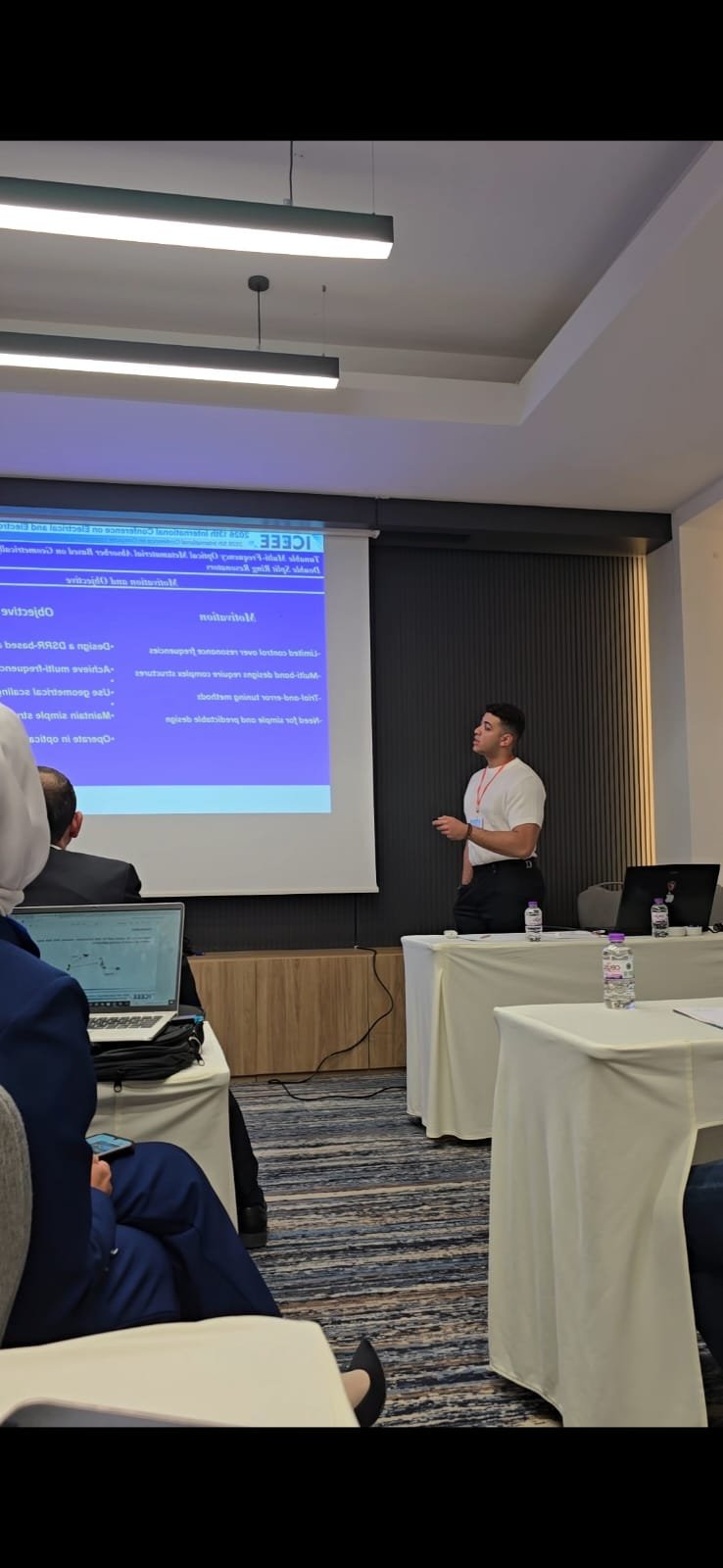
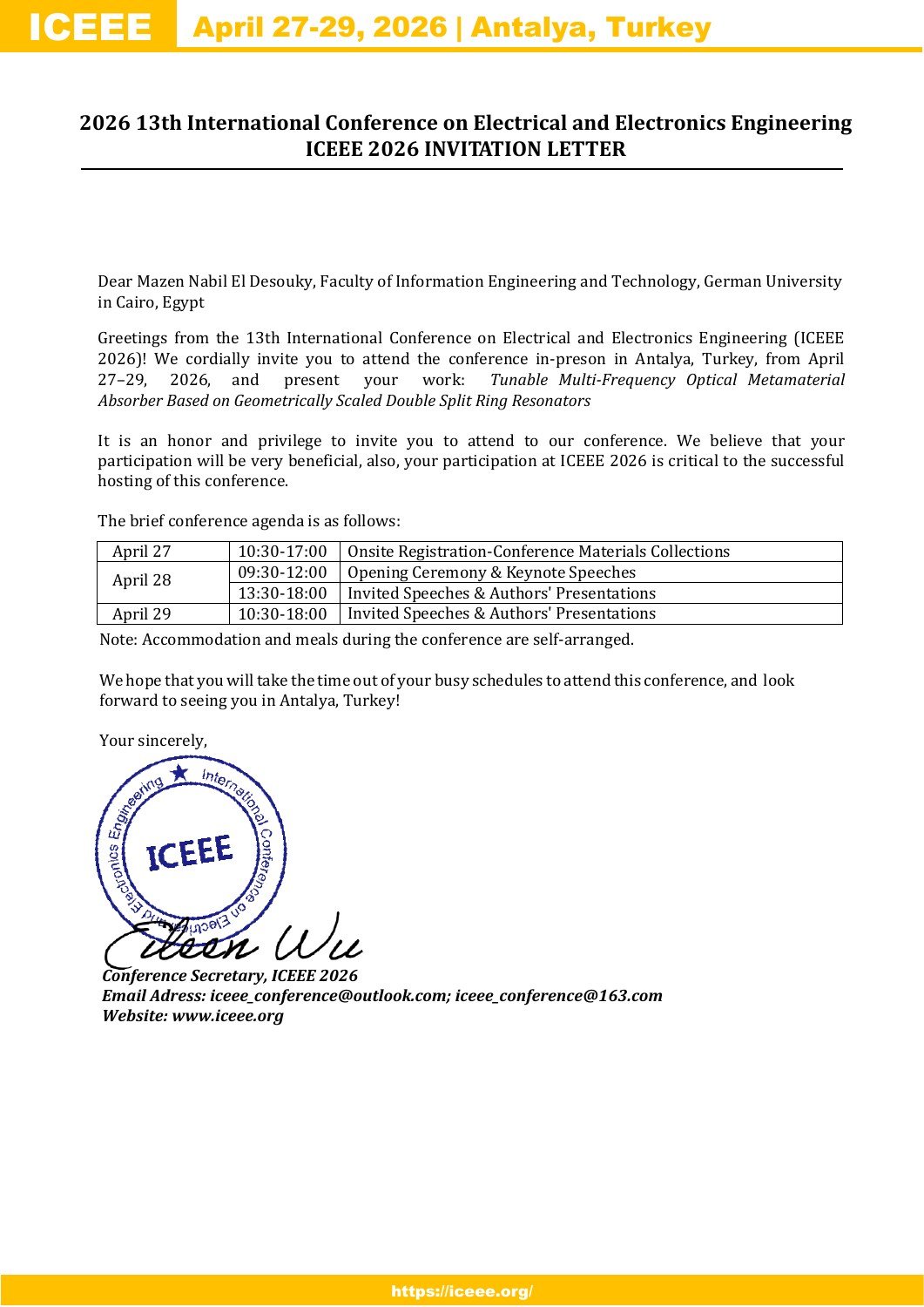
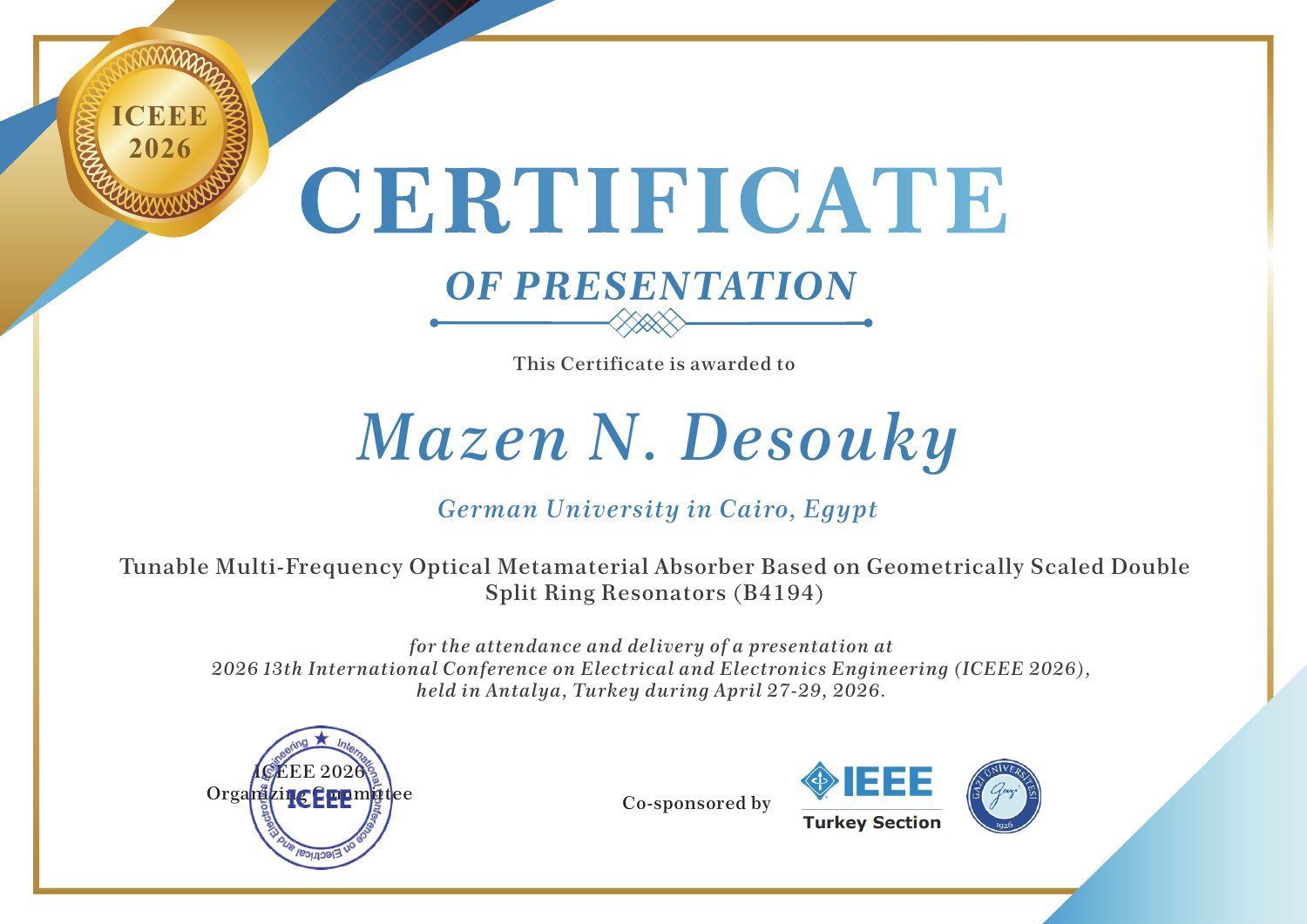
My bachelor-thesis work on the development of a tunable multi-frequency optical metamaterial absorber was presented in Antalya during the 13th International Conference on Electrical and Electronics Engineering.
From simulation to presentation.
Real moments from ICEEE 2026 — the conference room, presentation, program, and research milestone.
Four resonators.
One engineered window.
The broadband stage is not four cards. It is one electromagnetic system: scaled DSRRs are progressively combined until their resonant modes interact, crowd the spectrum and form a wider absorption region.
A single scaled DSRR defines the starting optical mode.
A second resonator creates electromagnetic interaction and additional modes.
More scaled resonators reduce the spectral spacing between neighboring peaks.
The four-cell configuration produces the strongest interaction and widest absorption region.
Read the resonance.
Then read the physics.
Switch between the designed optical bands. The laboratory pairs the reflection response with the corresponding current interpretation so the result reads like engineering evidence—not an image gallery.
The simulation left the lab.
It became a conference paper.
The bachelor-thesis work on geometrically scaled DSRRs was carried from CST/FDTD simulation to an international presentation in Antalya. The official invitation, presentation certificate and paper form the research record.
The complete research, preserved as a document.
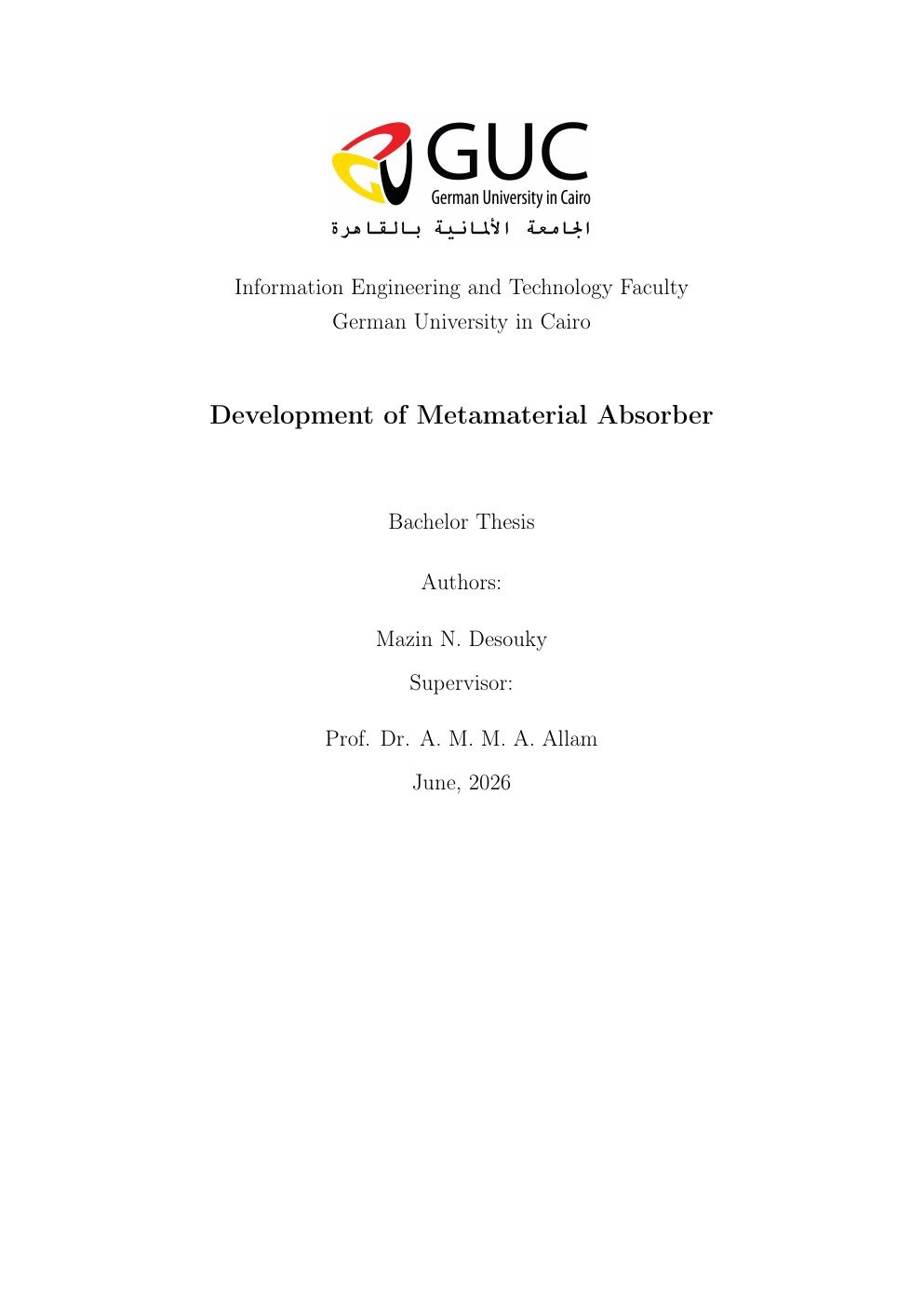
From the first DSRR scaling study to the multi-resonance absorber, the final thesis records the simulation methodology, optical response, surface-current interpretation and the progression toward broadband energy harvesting.
 OPEN THESIS ↗
Development of
Metamaterial Absorber
The thesis demonstrates geometrical tuning from 423 to 831 THz with near-unity absorption, then extends the concept to coupled multi-cell resonators for wider spectral coverage.
One thesis.
Six engineering moves.
From a subwavelength resonator to an international conference record, each stage answered a different engineering question.
Start with a ground-backed metamaterial absorber.
Ag / SiO₂ / Ag unit cell with FDTD analysis.
423 · 518 · 640 · 831 THz.
Interpret localization, coupling and higher modes.
Increase resonance density toward a broader window.
Move the work from thesis to international stage.
Engineer the geometry.
Control the spectrum.
Optical metamaterials · electromagnetic simulation · frequency-selective absorption · energy-harvesting research.